
Creating a Game Model
Your Philosophical Blueprint for Footballing Success

The Game Model—Nowadays, it is common to see Football Manager players implementing Game Models into their saves. However, please do not make the mistake of oversimplifying the concept, reducing it to a mere formation or an adjective like “tiki-taka.” The Model is a comprehensive philosophy, not just a label.
Today’s blog will look to cover five key stages to ensure you create a Game Model in Football Manager 2026 which truly works and provides your team with a clear, enduring identity:
The Game Model Must Come Before the Style and Game Principles
When taking over a new team, establishing the Game Model is the foundational step that precedes all else. This model is essentially your complete philosophical blueprint—the structured, overarching system that dictates how your team will behave in every phase of the game.
It is more comprehensive than a mere “style” of play, encompassing all general ideas about how the side will function both in and out of possession, and during transitions. We must build team culture from the ground up, and this Model provides the non-negotiable framework for that culture.
I suggest getting out a notepad and writing a few simple thoughts on how you want to see your side play, because these simple thoughts are the DNA from which the entire Game Model will be developed.
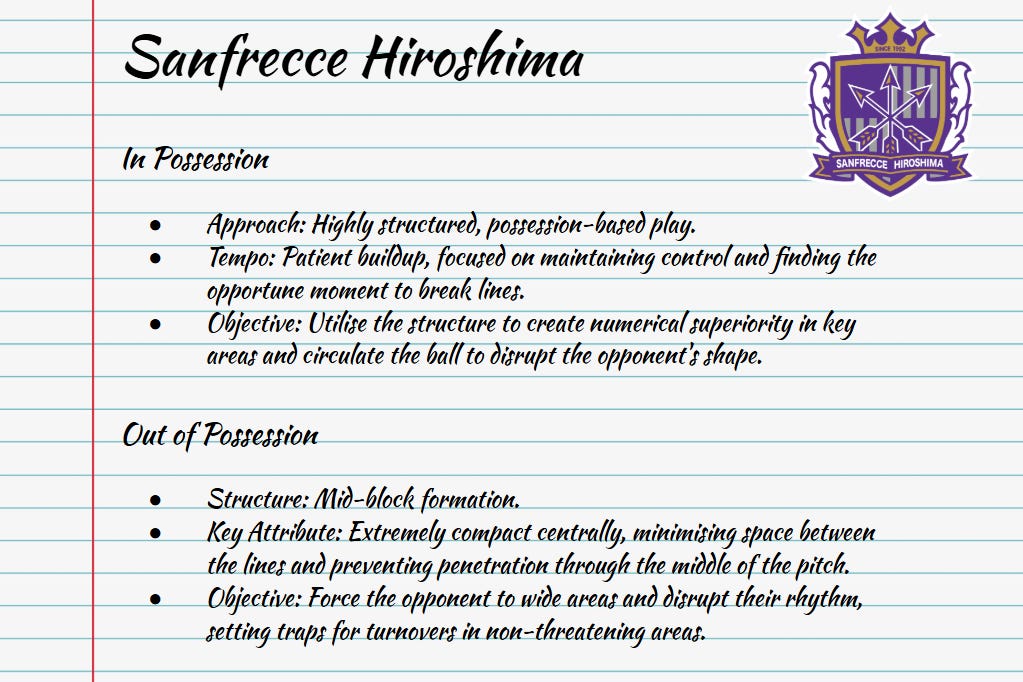
Players First, Coach After
Now that you have a rough idea of the philosophy you want to bring to your save, it is time to start peeling back the layers and truly understanding your players. This step forms the bridge between your theoretical Game Model and its practical implementation on the pitch. We must understand if the players currently at our disposal can identify with the style and principles you propose. The core principle here is adaptation, prioritising the existing talent over a rigid system.
One quick (ish) way to complete this task is to select five or six key players—those you believe will be fundamental to your team’s success—and view their attributes (Technical, Mental, Physical) noting which ones score the highest. Reflecting on your players’ strengths is key to enhancing your team’s performance, as it allows you to tweak your Game Model to suit the personnel.
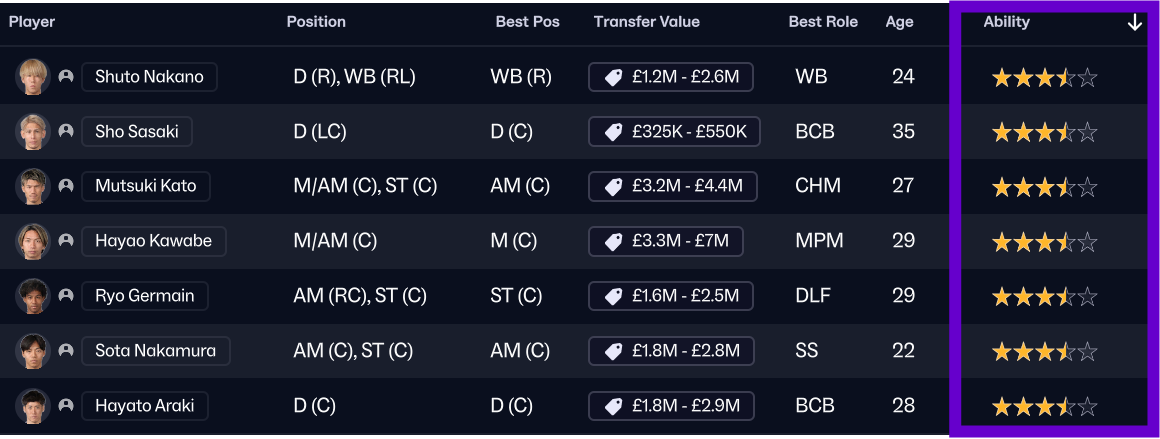
However, me being me - I have taken the opportuntiy to fire up the spreadsheet and conduct my analysis the calculated way. I will now walk you through this process using Sanfrecce Hiroshima as my example, a team which until today, I knew nothing about and had never watched.

Fortunately for me, six Sanfrecce Hiroshima players were nominated for the 2025 J.League Outstanding Player Awards - Therefore, I simply have picked these players as my sample.
Technical Attributes

Slightly Shorter Passing: Scoring high on First touch, Passing, and Technique are essential for fast, inticate, short passing movements under pressure.
Mental Attributes

Attacking Mentality: High composure, Team Work, and Anticipation ensure the team can handle the higher risk and maintain structure. High Stamina and Natural Fitness sustain the increased effort required for this mentality.
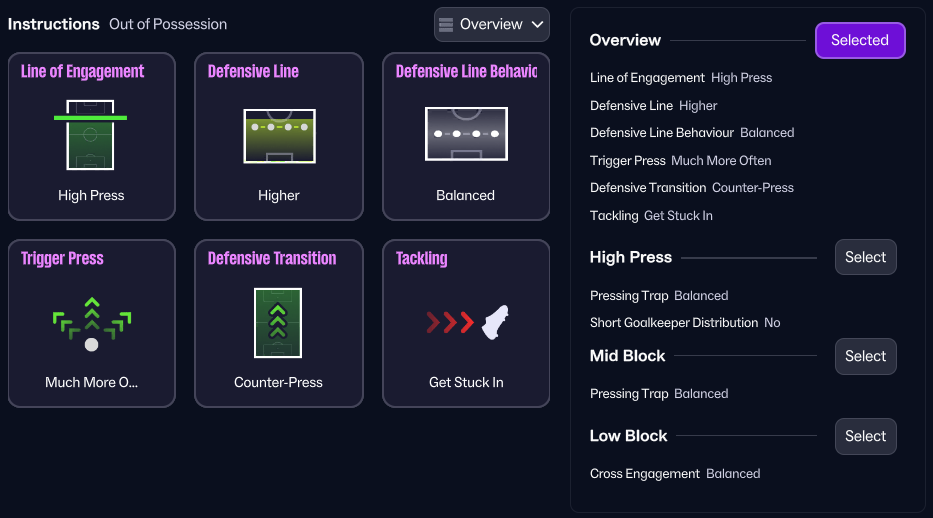
Get Stuck In: High Aggression and Bravery ensure players win tackles decisively and dominantly, allowing for quick ball recovery and transition to attack.
Distribute Quickly: High GK Anticipation and the teams’s high Pace/Acceleration mean the counter-attack can launch instantly upon a save or recovery.
Physical Attributes

Run At Defence: High Acceleration, Pace, and Agility are maximised by encouraging players to take on their markers, creating overloads and drawing opponents out of position.
Extremly Urgent Pressing: High Aggression, Work Rate, Stamina, and Bravery make the press suffocating and relentlessly physical.
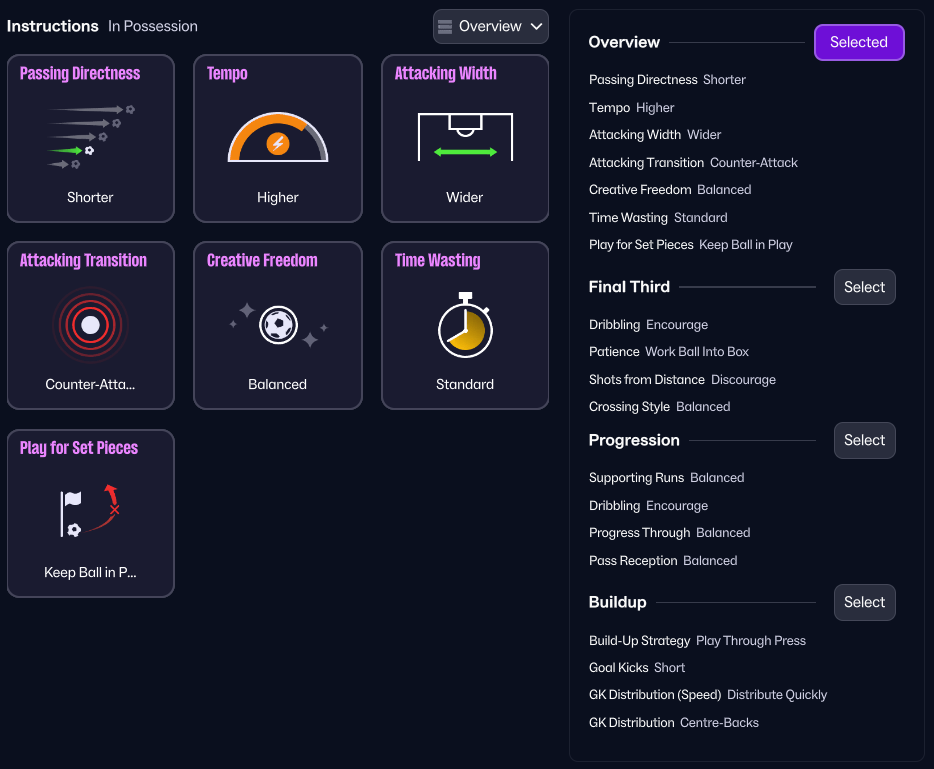
In Possession Team Instructions
Out Of Possession Team Instructions
Formation vs. Game Principles
It is worth noting that formations are just tools to connect players on the field - they are not the goal.
Playing in a 4-3-3 doesn’t automatically mean you’ll play positional football, and using a 4-4-2 doesn’t mean you’ll rely on direct play.
It is not about how the team is structured; it’s about how they operate within the structure.
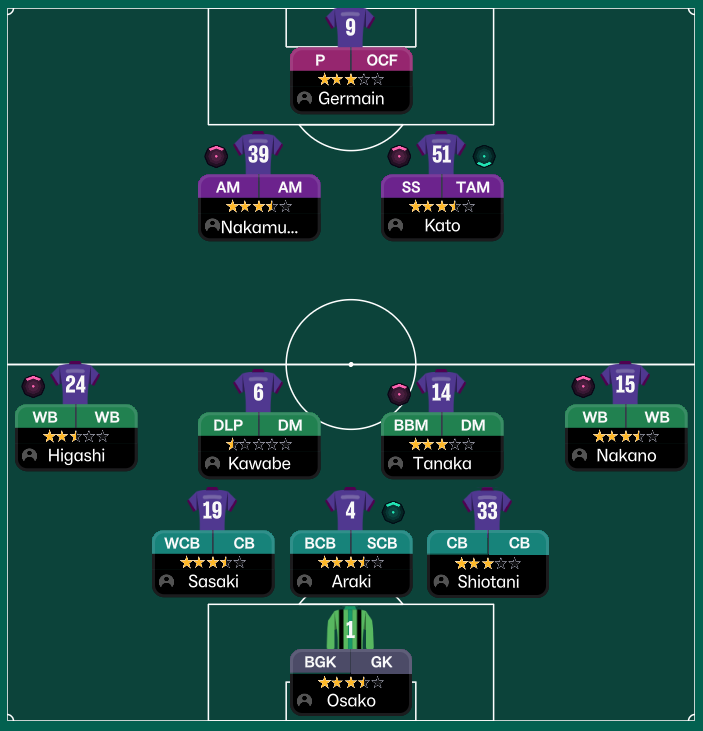
I have set the team up in a 3-4-2-1 structure - I have opted for this shape as it naturally divides the field up into specialised zones which I believe support the Game Model.
Defensive Stability
Deploying three central defenders should provide us with dedicated cover. The back three provide a solid rest defence to deal with the threat of any central counter-attack. We should always have central numerical superiority against the common one or two stiker formations.
Width and Overload
The Wing Backs provide the entire width of the team - having no wide midfielders ahead of them creates massive amounts of space to run into, maximising their high pace and stamina to deliver crosses.
Without the ball these players will operate as the key components of the Flank Funnel pressing trap, which will hopefully enable the quick 3v1 or 3v2 overloads in wide areas.
Tactical Flexibility
Two central midfielders provide balance between control and recovery. The pairing of the Deep Lying Playmaker and the Box-toBox midfielder is key - the DLP provides the control and a tempo-setting anchor. Whilst the B2B provides the required relentless energy and ball-winning capacity for the Counter-Press.
Central Penetration
Two Attacking Midfielders create a dangerous midfield-forward overload in Zone 14. By playing two 10’s you instantly create a 3v2 or 3v3 situation against the oppositions centre-backs and holding midfielders.
Step-by-Step
Prioritising information to your players is crucial; when implementing a Game Model in Football Manager, please do not expect to dominate from the outset. This is not a plug-and-play tactic—it is an investment, an investment in providing your side with a clear blueprint and an identity that, if you choose, can follow you for an entire save. The full realisation of your model is an evolutionary process, not a single event.

The implementation of role-specific individual training and granular details through the use of player and opposition instructions all play their part in translating abstract information into concrete knowledge and action.
Remember First define the ‘what’ (your Game Model and Principles), then work out the ‘how’ (the individual training, traits, player instructions, and continuous refinement).
Rebuild, Readjust, Resilience
It is important to understand that the Game Model is a fluid process that is shaped by the players, not a static monument. As your playing staff evolves within the game world—through new signings, player development, or key departures—so will new opportunities and challenges arise that necessitate change.
Taking the time to Rebuild and Readjust your Game Model each season will help ensure you are keeping pace with player development and, more importantly, being Resilient.
Resilience in this context means maintaining your core identity while having the tactical flexibility to withstand changes in personnel or adapt to dominant trends in the league. This cyclical commitment to self-assessment is key to long-term success.